


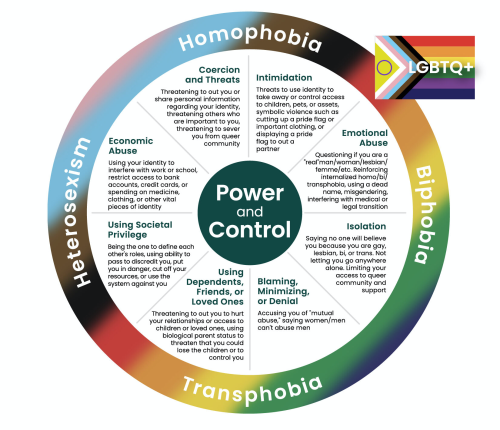
Domestic Violence, Sexual Violence, and Human Trafficking within LGBTQ2+ communities are fundamentally driven by power and control. These issues are often made worse by societal stigma, homophobia, and transphobia. Abuse can take many forms, including threats to "out" someone, manipulation of hormone therapies, and higher rates of sexual assault. Individuals may also encounter unique barriers when seeking help.
 Domestic Violence in LGBTQ2+ Communities
- Definition & Dynamics: Similar to heterosexual relationships, domestic violence involves a pattern of coercive behavior—whether physical, emotional, or financial—used to maintain power over a partner.
- Unique Examples: Abusers may threaten to "out" a partner to family, employers, or immigration officials. They may use offensive pronouns, ridicule a partner’s body or gender expression, withhold hormone therapies, or claim that abuse is normal within the community.
- Synonyms/Related Terms: Intimate Partner Violence (IPV), same-sex abuse, relationship abuse, coercive control.
Sexual Violence in LGBTQ2+ Communities
- Definition & Examples: Sexual violence includes acts without consent, such as sexual assault, rape, and harassment. These acts can be committed by partners, acquaintances, or strangers.
- Unique Examples: Examples include "corrective rape," which is an attempt to change a victim’s sexual orientation or gender identity, intimate partner sexual violence, and harassment based on gender identity.
- Prevalence: Nearly 44% of lesbian women and 61% of bisexual women have experienced rape, physical violence, or stalking by an intimate partner.
Human Trafficking in LGBTQ2+ Communities
- Definition & Risk Factors: Human trafficking is the use of force, fraud, or coercion to exploit someone for labor or sex. LGBTQ2+ individuals, especially youth, are at higher risk due to family rejection, increased rates of homelessness, and social marginalization, which make them targets for traffickers.
- Unique Examples: Traffickers may target homeless LGBTQ+ youth who have been kicked out of their homes, promising them safety or a "family" before forcing them into sex trafficking.
Common Barriers to Seeking Help
- Fear of "Outing": Survivors are often afraid to disclose their sexual orientation or gender identity to police or service providers, fearing further discrimination or harm.
- Lack of Resources: There are few shelters equipped to serve transgender individuals or those who face the unique dynamics of same-sex abuse.
- Homophobia/Transphobia: Victims may encounter discrimination from service providers, which can lead them to believe that no help is available.
If you or someone you know is experiencing violence, help is available. Contact the Shelter Home of the Foothills.